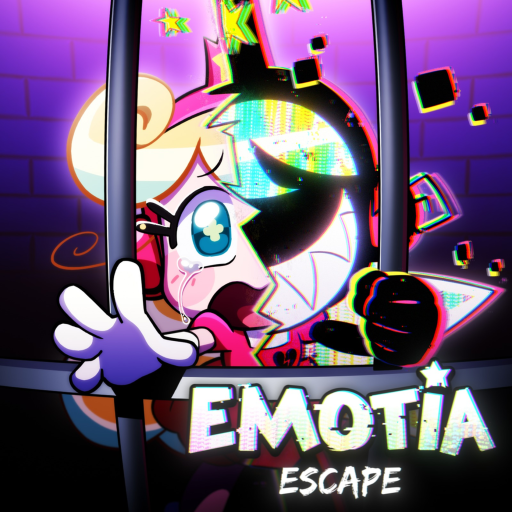
EMOTIA Escape Story: Official Afterlife and Mission Guide
Explore the EMOTIA Escape story through its official afterlife premise, the Emotion Prison crisis, Corrupted Emotians, and the player's verified mission.
The official premise in one clear line
The central rule is the most important part of the EMOTIA Escape setting: a dying person's last emotion defines their afterlife. The official Roblox description presents that idea before it introduces any room, enemy, or mission. It turns emotion into more than a character theme. Emotion determines what comes after life, and the game places the player inside a crisis built around that rule.
The crisis is located in the Emotion Prison, a dungeon-like place that has been taken over by Corrupted Emotians. Players venture deeper into the prison, solve puzzles and mysteries, survive dangerous threats and intense chases, and work toward cleansing the corrupted inhabitants. The stated goal is to restore peace. Those points form the verified backbone of the story; they do not require guesses about a secret ending, a named villain, or a complete timeline.
That distinction matters because the game is labeled BETA. Visual details, rooms, and future narrative material may expand while the premise remains recognizable. This guide therefore explains what the official text establishes, how the player mission connects to gameplay, and where the source stops.
Use the official EMOTIA Escape Roblox experience as the current authority. The verified foundation is:
- a last emotion defines the afterlife;
- Corrupted Emotians occupy the Emotion Prison;
- players solve, survive, cleanse, and work to restore peace.
Why the Emotion Prison needs the player
The official description does not frame the prison as an ordinary escape room. It is the setting where Corrupted Emotians have taken control, and it gives players a purpose beyond reaching an exit. Entering deeper areas exposes the group to puzzles, mysteries, threats, and chases; completing that journey supports the larger objective of cleansing the corrupted beings and restoring peace.
This creates two connected layers. On the surface, players need to survive immediate rooms and missions. At the story level, those actions are part of repairing a damaged afterlife. The description never names the exact process that caused the takeover, the authority that built the prison, or the technical method of cleansing. Those questions are interesting, but they remain open rather than verified canon.
The word “prison” also should not be stretched into a claim about who deserves punishment. The approved source calls it a dungeon-like prison and describes what players encounter there. It does not provide a moral classification of every inhabitant. A careful reading keeps the label, the takeover, and the objective while avoiding invented motives.
| Story element | Officially supported meaning | Not yet established |
|---|---|---|
| Last emotion | Defines a dying human's afterlife | A complete list of emotion-based destinations |
| Emotion Prison | Central dungeon-like setting with puzzles, mysteries, and threats | Its full origin, map, and governing authority |
| Corrupted Emotians | Occupy the prison and are targets of the cleansing mission | A complete identity and behavior catalogue |
| Player mission | Go deeper, survive, solve, cleanse, and help restore peace | A confirmed final ending or every mission step |
| BETA status | The official title currently includes the label | Which story elements will change before release |
How story and gameplay reinforce each other
The official gameplay loop is unusually useful for understanding the narrative because each listed activity fits the prison crisis. Puzzles and mysteries make the setting something to investigate. Dangerous threats and intense chases make corruption an active problem rather than background decoration. Missions create concrete objectives, while character customization and upgrades support continued progression deeper into the experience.
The game supports single-player and multiplayer play, with the official description advertising teams of up to five. That gives the same story premise two practical forms. A solo player experiences the prison as an individual survival and discovery route. A group can divide attention, communicate during pressure, and attempt the same objectives cooperatively. The source does not state that party size changes canon, unlocks a special ending, or assigns fixed story roles, so those ideas should not be presented as facts.
Customization is also officially mentioned, but the available story evidence does not define every character's biography or explain whether upgrades exist inside the fiction. It is safest to treat customization and upgrades as verified game systems that support missions. Any deeper lore connection should be labeled as interpretation until a creator-owned source explains it.
For players who want a spoiler-light approach, the best starting point is simple: remember the last-emotion rule, understand that the prison has been overtaken, and let rooms reveal their own atmosphere. You do not need an invented chronological summary to follow the verified mission.
What the official story does not confirm
A responsible wiki is most useful when it says what is unknown. The collected official description does not enumerate the prison's mysteries, name every Corrupted Emotian, provide a chapter-by-chapter plot, or confirm a complete ending. It also does not explain what each last emotion produces, why particular humans arrive in a particular place, or whether every character shown in promotional art represents a separate afterlife category.
Community walkthroughs can document what a player saw in one build. They are helpful for recognizing rooms or comparing routes, but they are not automatically official narrative documentation. A video title that mentions an ending does not prove that the ending is final, universal, or fully explained. The live Roblox experience and creator-owned announcements remain the final checks for update-sensitive material.
When evaluating a theory, ask three questions. First, is the claim stated on the official experience page or a creator-owned channel? Second, is it directly visible in the current build rather than inferred from artwork? Third, could it have changed since the recording date? If the answer is uncertain, keep the theory separate from the verified summary.
This method preserves the appeal of the setting. Mystery still has room to be mysterious, while new players receive a dependable foundation instead of a fan theory disguised as a plot fact.
A spoiler-aware reading order
Start with this premise guide, then read the focused Emotion Prison and Corrupted Emotians pages. The prison guide separates confirmed setting functions from map claims, while the enemy guide explains the verified contrast between cute appearances and dangerous threats. The secrets guide is deliberately limited: it confirms that mysteries exist but does not manufacture secret locations or rewards.
The reward page belongs later in the reading order because it covers a dated official event rather than the core narrative. Its Morning Glory gift is a verified promotional reward and should not be treated as proof of a story mechanic. Likewise, the Codes page maintains an empty verified code list instead of turning the group reward into a code.
If the experience receives a substantive story update, the clean way to revise this page is to record the official wording, observation date, affected rooms or missions, and whether the change is permanent. That allows the story guide to grow without rewriting older assumptions as if they had always been canon.
FAQ
What is the story of EMOTIA Escape?
A person's last emotion defines their afterlife. Players enter the Emotion Prison after Corrupted Emotians take it over, then venture deeper, solve puzzles and mysteries, survive threats, cleanse corruption, and work to restore peace.
Why do players enter the Emotion Prison?
The verified purpose is to confront the prison crisis. Gameplay objectives support the mission through exploration, puzzles, chases, cleansing, and other challenging missions. The source does not identify a separate personal motive for every playable character.
Are all Corrupted Emotians villains?
The official description calls them dangerous occupiers that players must cleanse. It does not provide a complete moral history or identity list, so a broader label would go beyond the evidence.
Is the complete ending confirmed?
No complete final ending is established by the approved official evidence. Because the game is labeled BETA, treat walkthrough endings as observations from a particular build unless the developer confirms otherwise.