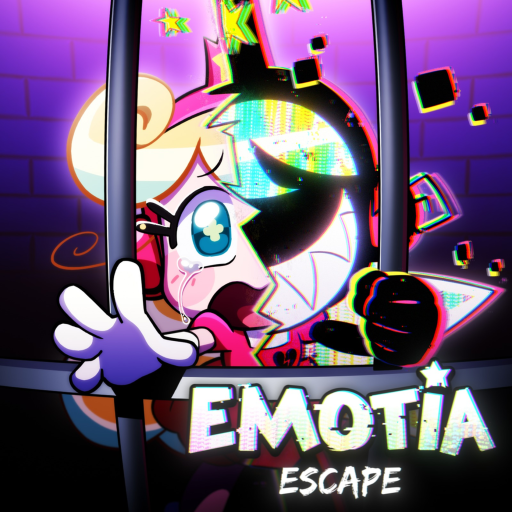
EMOTIA Escape Emotion Prison Story and Setting Guide Wiki
Understand the EMOTIA Escape Emotion Prison story, its verified role as a dungeon-like setting, its puzzles and threats, and the limits of current map evidence.
The Emotion Prison is the central setting
The Emotion Prison is the dungeon-like location at the center of EMOTIA Escape. According to the official Roblox description, it has been taken over by Corrupted Emotians. Players enter it, venture deeper, solve puzzles and mysteries, face dangerous threats and chases, and pursue missions connected to cleansing the corruption and restoring peace.
That description establishes the prison as both a place and a structure for progression. It contains obstacles that can be solved, unanswered material that can be investigated, and threats that create pressure. “Deeper” signals continued movement through the experience, but the approved source does not publish a fixed floor count, a complete map, or a permanent room order.
The setting also depends on the game's broader rule: a dying person's last emotion defines their afterlife. The prison exists inside that emotion-shaped afterlife premise. The source does not explain who constructed it, which emotions lead there, or whether every player character arrived through the same path. Those are unresolved lore questions, not facts to fill with assumptions.
Verify current rooms in the official EMOTIA Escape Roblox experience. Keep three evidence layers separate:
- official premise and creator-owned wording;
- visible observations from the current BETA;
- community interpretations that remain theories.
How the prison shapes the gameplay loop
Every major activity named in the official description fits the setting. Going deeper provides direction. Puzzles and mysteries make the rooms interactive. Increasing danger and intense chases interrupt careful investigation. Challenging missions give players concrete goals. Customizable characters and upgrades support repeated progress through those challenges.
This combination means an effective run may switch between observation and urgency. A player can inspect a room for clues, respond to a threat, regroup after a chase, and continue the mission. That is a reasonable reading of the listed activities; it is not a claim about a specific control, timer, checkpoint, or puzzle solution.
The game supports solo and multiplayer play and advertises teams of up to five. A group can share visible information, but the official evidence does not define mandatory roles or a required party composition. A solo player can also enter the experience, so a guide should not imply that five people are necessary for every room.
| Prison feature | Verified function | What remains live-game dependent |
|---|---|---|
| Deeper progression | Players venture farther into the prison | Exact floor count and permanent room sequence |
| Puzzles | The prison contains puzzles to solve | Controls, solutions, and whether puzzles rotate |
| Mysteries | Mysteries are an official part of the setting | A complete secret or clue catalogue |
| Threats and chases | Danger increases and intense chases occur | Enemy values, triggers, and timers |
| Missions | Players complete challenging missions | A full current mission list and rewards |
| Restoration objective | Cleansing supports the goal of restoring peace | The final ending and exact cleansing mechanic |
A reliable way to document rooms and puzzles
Because the experience is labeled BETA, map information should be treated as dated observation. Begin by confirming the official place ID 136309958558481 and developer EMOTIA x VERSEWORK. Record the date, visible room label if one exists, the objective shown by the current interface, and the sequence of actions that produced a result. If a puzzle changes between servers, describe the stable recognition cues rather than publishing one answer as universal.
For each puzzle, distinguish the clue from the solution. A visible symbol, object, sound, path, or prompt is an observation. The conclusion drawn from it is an interpretation until the action repeats. If more than one solution is possible, document the tested route without claiming it is the only route.
For chases, avoid inventing precise speed or timing thresholds. Record where the warning appears, what safe choices were visible, and whether the same behavior repeated. A community video can provide a comparison, but the current server is the final authority. A video labeled with a number of floors documents that creator's recording; it does not automatically establish the game's current total.
This process is slower than copying a map from a search result, but it prevents unrelated rooms or old versions from entering the wiki. It also creates notes that remain useful after an update: the observer can identify exactly which part changed.
What “deeper” does and does not promise
The official phrase supports a progression from shallower to deeper parts of the Emotion Prison. It also connects that movement with increasing danger. It does not promise a specific number of chapters, a particular ending room, a guaranteed boss, or a fixed sequence of special floors.
Players may encounter community walkthroughs whose titles list ten, twenty-three, or twenty-five floors. Those titles are useful discovery metadata, but they represent recordings made at particular times and may use “floor” differently. Without creator-owned documentation or a verified current-game counter, combining them into one definitive total would be misleading.
The same rule applies to “all rooms” claims. A complete route in one build can become incomplete after a BETA update, and optional or randomized spaces can complicate the meaning of complete. This guide therefore focuses on the prison's officially stated purpose and teaches a reproducible observation method rather than asserting a permanent map.
Story questions the setting leaves open
The Emotion Prison raises deliberate questions. Who established it? How does a last emotion place a human in this afterlife? What made Emotians become corrupted? What does cleansing change? How do the game's customizable characters relate to the prison's history? The approved official description does not answer those questions in detail.
An unanswered question is not missing filler. It is a boundary between the published premise and future material. Promotional imagery can suggest moods and relationships, while a room can contain visual storytelling, but neither should be converted into a named historical event without text or creator confirmation.
When new evidence appears, classify it by source. A live in-game prompt can document current objectives. A creator-owned announcement can establish intended lore or an update. A community walkthrough can record what was visible. A fan interpretation can be discussed as interpretation. Keeping those layers separate lets the wiki expand while preserving trust.
Planning a spoiler-light first visit. New players only need three verified facts before entering: the prison has been taken over, the route involves puzzles and danger, and the wider mission is to cleanse corruption and restore peace. That foundation explains the stakes without exposing room solutions or alleged endings.
If playing with friends, agree on short callouts for visible clues and threats. If playing solo, pause where the current room allows and record one observation at a time. Neither routine claims a hidden mechanic; both respond to the official combination of puzzles, missions, and chases.
After the first visit, the Story page provides the broader afterlife premise, and the Corrupted Emotians page explains the verified enemy role. The Secrets Guide deliberately stops short of a complete list because the official description confirms mysteries but does not enumerate them.
FAQ
What is the Emotion Prison?
It is the central dungeon-like setting of EMOTIA Escape. Corrupted Emotians have taken it over, and players venture deeper through puzzles, mysteries, threats, chases, and missions.
How many floors does the Emotion Prison have?
The approved official evidence does not provide a permanent floor count. Numbers in community video titles should be treated as dated recordings and checked against the current BETA build.
Can the prison be played solo?
Yes. The official description supports single-player and multiplayer, while teams of up to five are advertised. It does not state that a full party is required.
Is there a complete map of every room?
No complete current map is verified in the official source used here. Room sequences and puzzle details should be documented with a build date and live-game observation.